
What Happened After AGD2026: A Room of Dentists Meets the Agentic Practice
A post-conference reflection on my AGD2026 lecture on the agentic practice: the argument I made, the questions a room of dentists pushed back with, and where dental marketing is heading.
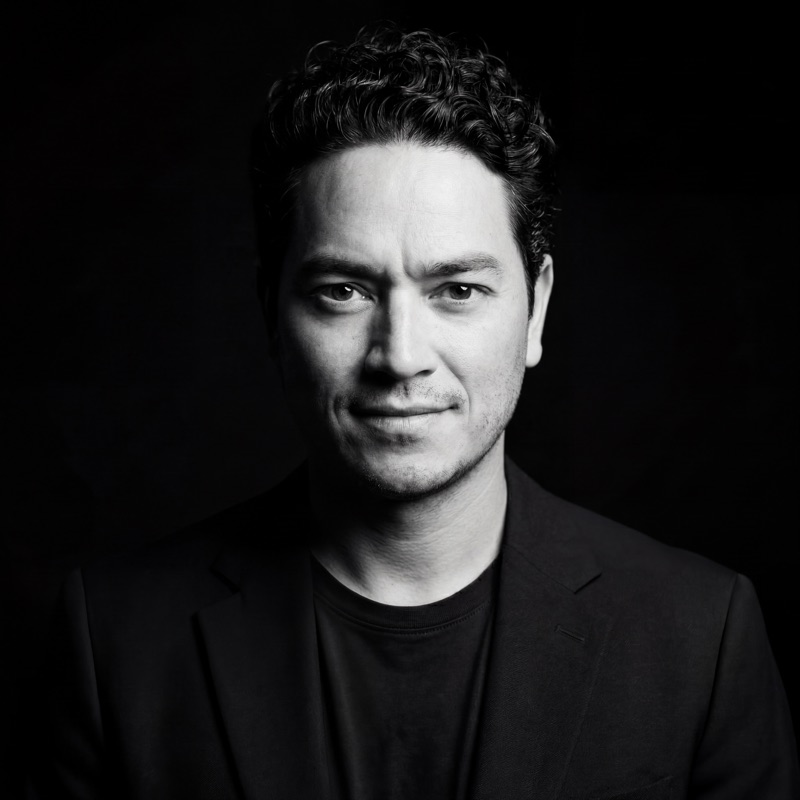
I spent 45 minutes at AGD2026 telling a room of dentists their marketing team is being rebuilt
On Saturday I gave a continuing education lecture at AGD2026 called The Agentic Practice: How Data, AI and Autonomous Marketing Are Replacing the Traditional Dental Marketing Team. It was a practice management session, three quarters of a CE credit, the kind of Saturday slot a dentist only takes if the business side of their practice is genuinely on their mind.
That self-selection is worth noting. The people who chose that room were not marketers. They were owners and clinicians who feel marketing happening to them: the agency invoice, the monthly report, the nagging sense that they should be posting more. None of them came to learn a new posting schedule. They came because something about the way they grow their practice has started to feel out of date, and they wanted to know what was replacing it.
So I did not open with how to market better. I opened with a harder idea: that the marketing team most practices have been renting is about to be replaced by a system they can own. This post is what I argued, the questions I got back, and what I think the conversation signals for where dental marketing is heading.
The argument: marketing is an intelligence layer, not a service
The spine of the talk was a reframe. For twenty years a dental practice has bought marketing as a service. You hire a vendor for the website, another for SEO, another for ads, maybe a fourth for reviews, and each one does a slice and sends a report. That model felt modern for a long time. I argued that 2026 is the year it breaks, not because the vendors are bad at their slice, but because the shape of the model is wrong.
The practices winning new patients right now are not the ones with the biggest budgets or the most posts. They are the ones that have built a system where data flows into insights, insights trigger action, and the action compounds over time without a human having to initiate every step. That is the line between automation, which runs a rule you set and then waits, and agentic marketing, which observes, decides, acts, and learns on its own.
I tried to make the distinction concrete, because it is the whole thing. Automation does the same thing every time. You tell it to send a text when a lead comes in, and it sends that text forever, whether it is working or not. An agent is different in kind: it watches what is actually happening, decides what to do about it, takes the action itself, and changes its behavior as the results come back. Automation executes a task. An agent manages an outcome. Once you see marketing that way, "post more content" and "boost another ad" stop sounding like strategy and start sounding like manual labor you have not automated yet.
None of that is an argument to do more. It is the opposite: stop buying activity, and start building a system that thinks, learns, and acts on your behalf.
The data is already in your building, you are just seeing it too late
The slide that I think landed hardest was not about artificial intelligence at all. It was the one that said: you already have the data you need, you are just seeing it a month too late.
Every practice produces the signals that matter, every single day. Where your new patients actually came from. How fast a new lead got a response, and whether it got one at all. Whether your visibility in local search is trending up or quietly sliding. Which ads are bringing in booked, completed patients and which are just spending. None of that is exotic. It is sitting in your systems right now.
The problem is latency. In the traditional model, those signals get collected, summarized, and mailed back to you as a report on the fifth of the month, describing a problem that started on the second. By the time you read it, the moment to act has passed, so the report becomes a postmortem instead of a steering wheel. You are always driving by looking in the rearview mirror.
Take the most ordinary example, the one every owner in the room recognized: a new patient fills out your form at 8 p.m. In the old model that lead sits until someone notices it the next morning, and by then a competitor who answered in five minutes already has the appointment. The data point, a new lead, existed the whole time. What was missing was not information, it was a system positioned to act on it the instant it appeared. Multiply that across every after-hours lead, every ad dollar spent on the wrong patient, and every local search you quietly slip on, and the cost of latency stops being a rounding error. It is most of the gap between the practices that are growing and the ones that feel stuck despite doing everything their vendors told them to.
An agentic system closes that gap. The same signals that used to become a monthly report instead become triggers. A lead that has not been answered in ten minutes is not a line in next month's summary, it is an action that fires now. A campaign that started attracting the wrong patient is adjusted this week, not flagged in thirty days. The data did not change. What changed is that it is connected to action in real time instead of being archived into a report. That is the part owners felt in their gut, because every one of them has read a report too late to use it.
The questions I got back
The slides are never the interesting part of a session. The questions are, because they tell you what a room of working dentists is actually weighing.
The most common one, by a wide margin, was some version of: isn't this just automation with a fancier name. It is a fair question, and answering it well is the difference between a buzzword and a real shift. Automation executes a rule and waits for you. An agent watches, decides, acts, and learns, every day, across every channel, and it changes what it does when your practice changes. Automation is a tool you operate. An agent is a specialist that operates on its own inside the direction you set. The test I offered the room was simple: if the system cannot change its own mind when the data moves, it is automation, not an agent.
The second cluster of questions was about control, and it is the worry I respect most. If a system is acting on its own, am I still the one deciding how my practice shows up. The honest answer is yes, and the framing matters. The owner still sets the direction and the strategy: who you are, who you serve, what you will and will not say. The agents execute and optimize inside that. You are moving from operating the tools to owning the system, not handing over the wheel. A good system makes you more in command of your marketing, not less, because for the first time you can actually see all of it in one place.
The third came from the multi-location operators in the room, and it was the most operational: how does this work across many sites, with governance and consistency, when every location has its own market and its own quirks. That is exactly the right question to ask, and it is why I framed the whole thing on enterprise-grade principles rather than as a single-office trick. A system that can run one practice well and cannot hold a standard across twelve is a toy. The groups that will pull ahead are the ones that treat this as infrastructure, with consistency built in, not as a gadget bolted onto each office.
Underneath all three questions was the same unspoken one: what happens to the people. The answer is that the reactive work disappears, the judgment does not. The front desk stops being the bottleneck for follow-up. The office manager stops assembling reports nobody acts on. The owner stops making marketing decisions from a month-old summary. The system absorbs the reactive, repetitive layer so the people can do the parts that actually need a human.
The objection worth taking seriously
The pushback I valued most was the most skeptical, and it came from exactly the kind of owner you would want to convince. The gist: I have been sold the future of dental marketing before, more than once, and every time it turned out to be the same boosted post with a new label. So what makes this any different.
I take that objection seriously because it is earned. A lot of practices have paid for "the future" and gotten a slightly nicer dashboard. The right answer is not a bigger promise. It is a different kind of work.
Most marketing you have bought is visible, one-time work. A post that goes up. An ad that runs for a month. A report that lands in your inbox. You can see it, which is reassuring, but it does not accumulate. It happens once and then it is gone, and next month you buy it again. Agentic marketing is the opposite: it is invisible, compounding work. It is the system quietly tuning the structure of your site, building the authority that makes you the answer when someone searches, and learning from every patient who comes through your door, whether or not anyone logs in that day. You do not feel it as a dramatic launch. You feel it months later as a position that keeps strengthening while your competitors start over every billing cycle. The only honest way to earn a skeptic is to admit the value is in the compounding, not the spectacle, and that the spectacle is exactly what they were sold before.
Readiness is a decision, not a budget
The session closed on the question every owner was really there to answer: is my practice ready for this, and if so, where do I start. I wanted them to leave with a way to think about it, not a sales pitch.
Readiness, I argued, has very little to do with size and almost everything to do with two things. First, is your data connected, or is it scattered across a website vendor, an ads vendor, a scheduling tool, and a practice management system that none of them can see. Second, are you willing to move from renting marketing as a service to owning it as a system. The first is technical and solvable. The second is a decision, and it is the one that actually separates practices.
The starting point is not a bigger budget, it is honesty about your own data. Look at where your new patients actually came from last month. Look at how fast, or whether, your leads got answered. Look at whether you are showing up when someone nearby searches for what you do. Most owners have never seen those three things in one place, and seeing them is the first real step, because you cannot let a system act on signals you are not even capturing.
From there the order matters. Connect the data into one source of truth. Pick the single highest-leverage signal, usually speed to lead or local visibility, and let the system act on that first. Then expand. An independent practice can move through that quickly because there is one market and one decision-maker. A DSO has to layer in governance and consistency so a standard holds across locations, which is slower but follows the same logic. Either way, the transition is from vendor-dependent marketing, where you are the integration layer holding six tools together, to a connected system that holds itself together and runs on enterprise-grade principles. That is Discovery before Strategy: understand the practice and its data first, then build the system that acts on it.
What I take from the room
Step back from one session and the direction is hard to miss. A room of general dentists chose to spend a Saturday CE slot, for credit, on data, agents, and autonomous systems, inside a practice management track. Five years ago that session was called social media for your practice. The fact that the conversation has moved here, and that the room was full and engaged rather than polite and skeptical, is itself the signal.
What I take from it is that the question owners are asking has changed. It is no longer how much should I be spending on marketing. It is how much of my marketing should I own versus rent. That is a different decision, and it is the one that separates the practices that will be hard to compete with in three years from the ones still waiting on a monthly report.
And the advantage compounds quietly, which is the part that should make a thoughtful owner act sooner rather than later. A practice that builds this now is not a little ahead of one that waits a year. It is a full year of continuous, learning, compounding work ahead, and that gap does not close by spending more later. The practices that win the next three years will not be the ones that marketed more. They will be the ones that stopped renting a marketing team and started owning a system.
Where this goes next
I did not end the talk by selling a tool, and I will not end here by selling one either. The point of The Agentic Practice was to give a room of dentists a clearer way to see a shift that is already happening to them, and a way to decide whether to build for it or keep renting around it.
What we are building at Patientfy is one answer to that shift: a full marketing team built from AI agents, running brand, website, ads, and search and authority as one connected system that learns from the practice's own data. If you want the longer version of the argument I made on stage, it is here: agentic marketing for dental practices.
But the takeaway from AGD2026 is bigger than any one platform. The traditional dental marketing team, the pile of vendors each sending a monthly report, is being replaced by systems that think, learn, and act. The owners who see that now will spend the next three years compounding. The ones who wait will spend them catching up.
Frequently asked questions
What is 'the agentic practice'?
It is a practice whose marketing runs as a system rather than a set of tasks: the data already sitting in the practice flows into insights, those insights trigger action, and the action compounds over time without a person having to start each step. In the AGD2026 lecture I framed it as the shift from buying marketing as a service to building marketing as an intelligence layer you own.
Isn't agentic marketing just automation with a new name?
No, and it was the most common question I got. Automation runs a rule you set and waits. An agent observes what is happening, decides what to do, takes the action itself, and learns from the result, continuously, across every channel. Automation does the same thing every time; an agent changes what it does as the data changes.
What data does my practice already have that matters?
More than most owners realize: where new patients actually come from, how fast leads get a response, search visibility trends, and ad performance patterns. The point I made on stage was that this data usually shows up as a monthly report that arrives too late to act on, when it should be driving decisions in real time.
How do I know if my practice is ready for this?
Readiness is less about size and more about whether your data is connected and whether you are willing to move from vendor-dependent marketing to a system you own. The session closed on a way to evaluate that and a prioritized order to make the transition, for both independent practices and DSOs.
Where should a practice actually start?
Start by seeing your own data honestly: where new patients came from, how fast leads got answered, where you show up in search. Connect those signals to one place, then let the system act on the highest-leverage one first. You do not need a bigger budget to begin, you need your data connected and a willingness to own the system instead of renting it.
Where is dental marketing heading?
Toward systems that think, learn, and act, and away from buying more posts or another boosted ad. The question owners are now asking is not how much should I spend on marketing, it is how much of it should I own.
The Patientfy agents that put this to work for your practice, automatically.
Every day, a patient picks someone.
You decide if it’s you.
Tell us about your practice and we will show you how the platform works. 20 minutes, no pressure, no pitch. Just a real look at what Patientfy can do for you.